
Healthcare leadership in 2026 asks more of MSO CEOs, health system CEOs, CFOs, operators, and investors than a strong internal plan alone. Markets move quickly. Capital cycles tighten and loosen. Clinical models evolve. Talent competition stays intense. In that environment, peer executive networks matter because they turn isolation into shared judgment. SCALE Community, powered by SCALE Healthcare, positions itself as an intelligence network for healthcare leaders who want candid dialogue, practical market context, and relationships that travel beyond a single conference badge.
This article explains why peer networks have become a core operating asset for MSO and health system leaders, how invite only events and roundtables create signal that generic webinars rarely match, and how platforms such as SCALE Connect extend those relationships between meetings. The goal is educational. Membership is one path among several for learning and connection. The right question is not how loud a marketing page sounds. The right question is whether a network helps you make better decisions with clearer peers.
Leaders who run multi site physician platforms or regional health systems often carry decisions that look simple on a slide and complex in practice. Should a service line expand before payer mix stabilizes. How should an MSO redesign central services without slowing local clinics. When does a partnership create leverage, and when does it create distraction. Public headlines and vendor decks can sketch the landscape. Peers who have lived the same tradeoffs can stress test assumptions in language operators trust.
SCALE Community describes its audience clearly: CEOs, MSO CEOs, health system CEOs, healthcare CFOs, investors, and aspiring leaders. That mix matters. An MSO leader gains perspective from health system counterparts who buy, partner, or compete across markets. A health system CEO hears how platform operators think about growth, physician alignment, and infrastructure. Investors listen for operating reality rather than polished narrative alone. Aspiring leaders learn the vocabulary of real board conversations earlier in their careers.
Public policy and payment context also shape executive calendars. Neutral resources such as the U.S. Department of Health and Human Services help teams track federal priorities, program updates, and health system themes that influence planning. Peer networks do not replace primary sources. They help leaders interpret those sources together, compare local impact, and decide what deserves executive attention this quarter.
Consider the difference between information and intelligence. Information is abundant. Podcasts, newsletters, reports, and conference panels fill every inbox. Intelligence is curated, timely, and actionable for a specific role. SCALE Community messaging emphasizes exclusive podcasts, executive insights, market intelligence, and invite only events built for CEOs, operators, and investors navigating healthcare at scale. That framing is useful even if you never join. It clarifies what busy leaders should demand from any peer forum: relevance, candor, and operators who still have skin in the game.
Invite only formats reduce noise. When attendance is curated for peer level conversation, people speak more honestly about what failed, what worked, and what they would not repeat. Roundtables and small executive sessions create room for questions that large keynote halls cannot hold. The homepage highlights an Executive Roundtable Series event in Atlanta on Tuesday, August 13, 2026, hosted with support from SCALE Healthcare and J.P. Morgan, focused on market strategy, opportunities, and challenges. That kind of session is valuable because the agenda centers peer discussion rather than one way presentation.
Annual leadership conferences and awards programs add another layer. A well run leadership summit can compress a year of market reading into a few high density days. Awards such as the SCALE Awards recognize operators and organizations in ways that also surface peers worth knowing. Recognition is not the whole point. The network effect around recognition often is. Leaders meet others who are solving adjacent problems, then continue the conversation after the stage lights dim.
Masters Gold Club sits at a more exclusive tier on the site for executives of larger MSOs, described as open to executives of MSOs generating a minimum of $100M in revenue, with benefits that include retreat style gatherings, national CEO network access, recurring leadership calls, and related member experiences. Community tier membership is listed around $500 per year and includes pathways such as local CEO roundtable access, conference related benefits for certain executive profiles, mentoring elements, business intelligence access, and private discussion channels. Those details are site claims about structure and access. They are not guarantees of outcomes. Leaders should evaluate fit against their own time, role, and learning goals.
Why do these structures matter specifically in 2026 for MSO leaders. Many MSOs sit at the intersection of clinical operations, payer strategy, technology vendors, and private capital expectations. Peer networks help MSO CEOs compare playbooks on centralization versus local autonomy, on specialty mix, on revenue cycle discipline, and on when to build versus buy. A trusted peer can warn you about an integration pattern that looked efficient and became brittle. Another peer can share how they staffed a shared services hub without draining clinic culture. Those conversations rarely appear in a public earnings call.
Health system leaders face a parallel but distinct set of pressures. Growth beyond the hospital walls, ambulatory strategy, workforce stability, digital partnerships, and community accountability all compete for attention. Peer CEOs and CFOs can compare how they sequence investments when capital is constrained. They can discuss vendor relationships with more honesty than a sales process allows. SCALE Community content and events lean into operator grade dialogue rather than abstract theory, which matches how health system executives actually allocate scarce time.
CFOs benefit when networks include financial leaders who can talk cash, covenants, and operating metrics without translation into marketing language. Healthcare finance is scenario planning under uncertainty, not only accounting. Peer CFO conversations help surface leading indicators other organizations watch and reporting habits that keep operators and finance aligned. When investors are in the room, dialogue can clarify how capital partners evaluate risk without turning every chat into a pitch meeting.
Events are only one channel. Continuous intelligence fills the gaps between flights and hotel ballrooms. The community highlights business intelligence such as healthcare market surveys, reports, and analysis intended for board rooms and operating reviews. Site messaging also references scale of participation, including 1500+ healthcare companies in the network narrative, large clinician representation figures, CEO survey participation, substantial podcast download volumes, and more than fifteen national and overseas in person events. Treat those as community claims about reach and activity, not as audited proof of personal ROI. Still, they signal an intent to operate as a durable network rather than a one time mailing list.
Podcasts remain a practical way leaders learn while traveling or between meetings. Analyzing Healthcare by SCALE Community is presented as an education focused series with conversations involving healthcare leaders across the landscape. Recent episode themes on the site range from prevention and care delivery, nursing and value based care, state payment models, health system growth beyond the hospital, telehealth and trust standards, performance turnarounds, and what health systems want from vendors. Listening becomes networking when episode ideas become questions you bring to a peer dinner or a platform message.
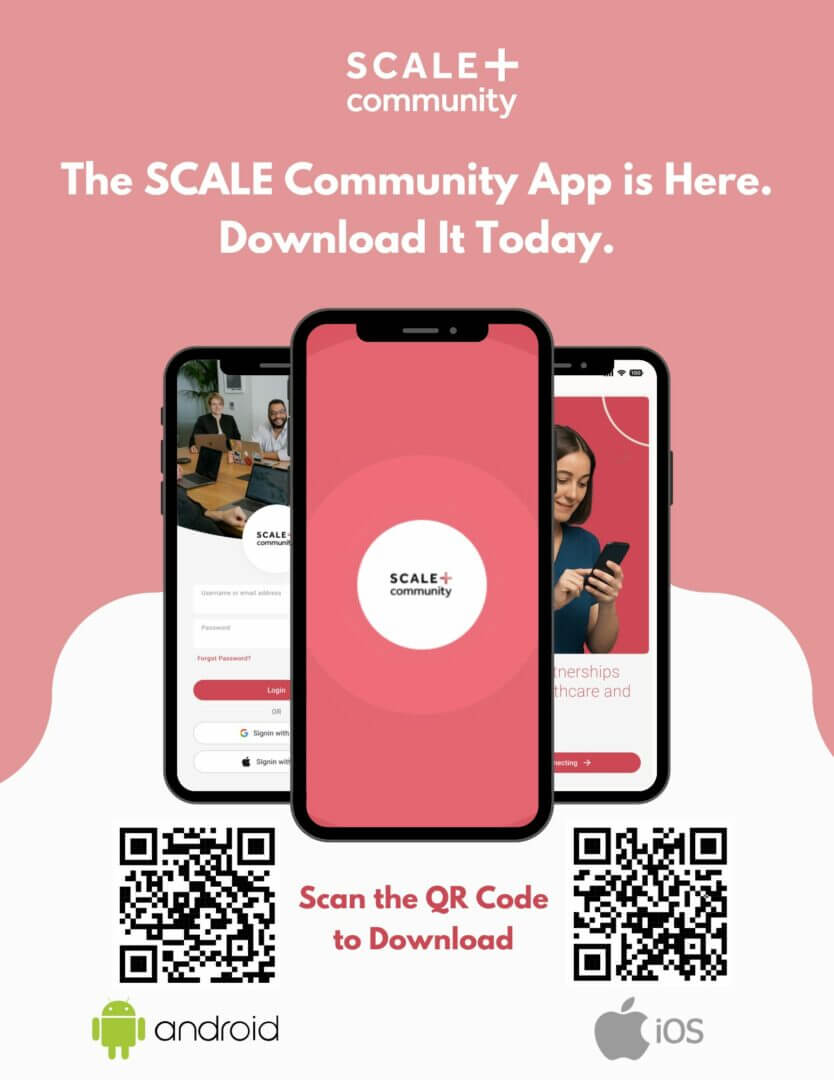
That is where SCALE Connect fits. The site introduces SCALE Connect as a private digital platform for healthcare leaders and vendors seeking smarter industry connections, designed for collaboration, knowledge sharing, and strategic partnerships. For MSO and health system executives, a members oriented platform can preserve momentum after a roundtable ends. Introductions do not have to wait for the next flight. Shared insights can surface while a decision is still open. Opportunities can be explored with more context than a cold email provides.
Digital platforms fail when they become noisy directories or vendor free for all spaces. They succeed when norms favor relevance and reciprocity. Leaders should look for communities that protect conversation quality, clarify who is in the room, and make it easy to follow up with the right person. SCALE Connect is presented as members only infrastructure that enables leaders to connect, share insights, and surface opportunities. Pairing that with in person events is the modern pattern: meet with depth offline, continue with discipline online.
Sponsors and partners appear on the SCALE Community homepage, including names such as Oracle, Clearwater, DLA Piper, Cushman Wakefield, J.P. Morgan, and BDO among others. Sponsorship can fund high quality programming and bring specialized expertise into the room. Leaders should still keep a clear boundary. Peer dialogue remains most valuable when it stays operator led. Sponsors can enrich sessions on technology, risk, legal, real estate, banking, or advisory topics when the agenda stays transparent and the peer conversation remains the center of gravity.
How should an MSO or health system leader evaluate any peer network in 2026, including SCALE Community. Start with audience fit. Are the people in the room close enough in role and responsibility that advice transfers. Next, evaluate cadence. A single annual summit can inspire. A year of roundtables, research, podcasts, and platform access can change operating habits. Then evaluate candor. Do sessions reward honest questions, or only polished success stories. Finally, evaluate time cost. The best network is the one you will actually use.
Educational value often shows up in small, compounding ways. You hear how another CEO staged a specialty expansion and avoid a sequencing mistake. You learn which metrics a peer CFO reviews every Monday. You meet an operator who already navigated a vendor category you are entering. You bring a board a clearer external view because you tested your narrative with people who will not rubber stamp it. That requires consistent access to peers who are still in the arena, not hype.
Membership messaging on the site points leaders toward SCALE tier memberships, with a Community tier around $500 per year and higher touch options such as Masters Gold Club for qualifying executives. There is also a clear path to learn why leaders join and to explore member benefits in more detail. If you are comparing options, read the tiers carefully, map benefits to your calendar, and decide whether the mix of events, intelligence, podcasts, and platform access matches how your team learns.
For a lighter first step, the site also promotes curated content pathways and free membership entry points tied to news and insight feeds. That can be a sensible way to sample voice and quality before committing executive time. Leaders who already want peer access can move toward membership exploration or contact pathways on the site. Treat network time like capital allocation, not optional socializing.
Operators sometimes ask whether peer networks create competitive risk. In practice, well facilitated communities set norms around confidentiality and constructive sharing. Leaders discuss patterns more often than proprietary playbooks, comparing workforce, payer friction, technology adoption, and governance without disclosing material nonpublic deal terms. The value is pattern recognition. The discipline is judgment about what to share.
Another common question is whether digital tools make in person gatherings obsolete. For healthcare executives in 2026, the answer is still no. Video calls are efficient, yet rarely equivalent to trust built over a focused morning roundtable or a multi day retreat. The strongest model combines both: high signal in person moments, then a platform and content rhythm that keeps relationships warm. SCALE Community packaging of events, podcasts, intelligence, and SCALE Connect reflects that blended design.
Leaders should also connect network learning to internal governance. After a useful event, capture three insights, one question for the next operating review, and one introduction to pursue. Share a short synthesis with your leadership team and ask a peer follow up within a week while context is fresh. Without that loop, excellent conferences become travel expense with fading memory. With that loop, membership becomes part of your management system.
If you are ready to explore further, start at the SCALE Community homepage, review membership tiers, sample podcasts, and learn about SCALE Connect. Browse upcoming gatherings through the community events experience and note sessions that match your role, such as executive roundtables and leadership summit programming for 2026. For broader public context while you plan, keep an eye on updates from HHS and bring those themes into peer discussion rather than treating policy as background noise.
Peer executive networks will not run your MSO or health system for you. They will not replace your board, your data, or your local market knowledge. What they can do is sharpen judgment, shorten the path to relevant introductions, and keep you from learning every hard lesson alone. In 2026, that combination of events, intelligence, and connected platforms is not a luxury accessory for healthcare leaders. It is a practical way to stay calibrated while the industry keeps moving.
Choose communities the way you choose advisors: for credibility, for fit, and for conversation quality you cannot get inside your own walls. SCALE Community, through SCALE Healthcare, offers one structured answer built around podcasts, executive insights, market intelligence, invite only events, roundtables, conference and awards programming, Masters Gold Club for qualifying executives, Community tier access around $500 per year, and SCALE Connect as a private networking layer. Evaluate it on those terms, then invest attention where peers, cadence, and candor match the decisions you must make next.