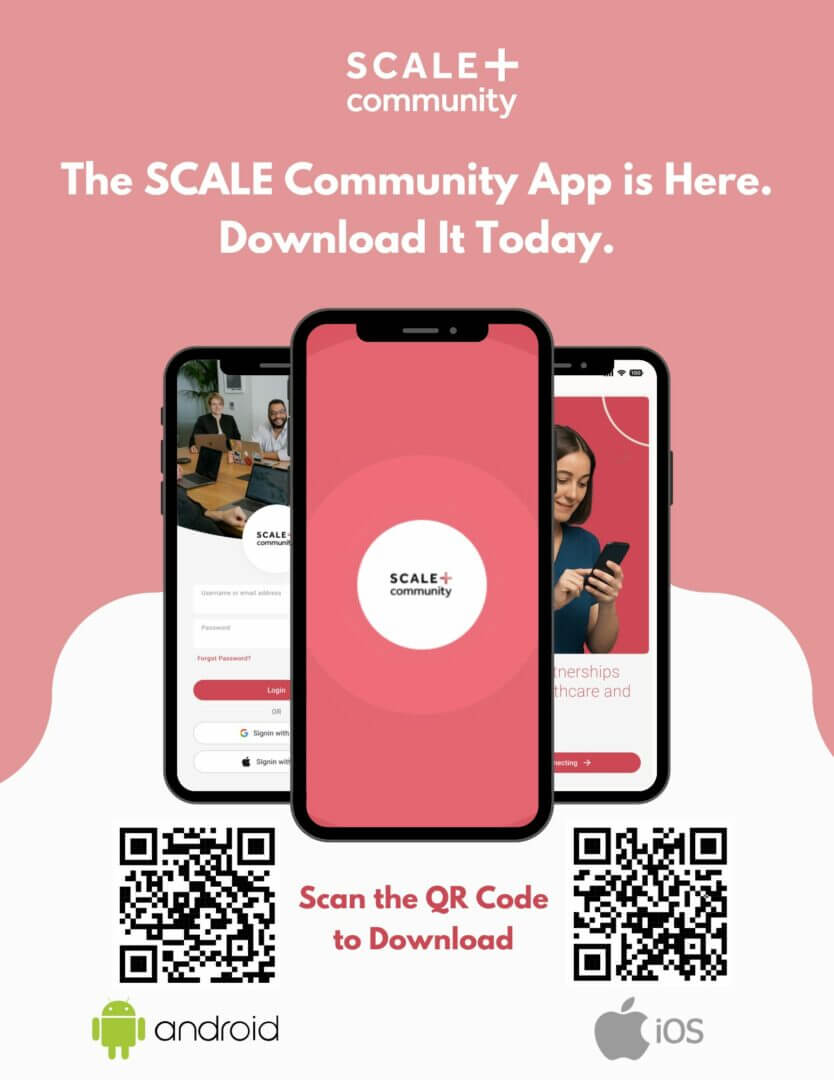

Healthcare leadership continues to evolve under increasing pressure. Leaders manage complex systems, respond to constant change, and work toward better outcomes with limited time and resources. Traditional approaches to growth no longer keep pace. Isolated decision making and disconnected networking slow progress. A smarter approach requires structure, collaboration, and shared purpose. That is where SCALE Community creates a meaningful shift.
Growth in healthcare does not come from information alone. Leaders already have access to data, reports, and insights. The challenge lies in applying that knowledge effectively. Without the right environment, even strong ideas fail to translate into results. A structured community bridges this gap by connecting insight to action through collaboration.
The difference begins with alignment. In many professional networks, participants have different priorities. Conversations often drift without direction. Within a focused environment, members share a commitment to performance and improvement. This creates clarity. Every interaction has purpose. Leaders engage in discussions that directly support their goals.
Collaboration inside this type of system moves beyond surface level interaction. It becomes a process of solving problems, refining strategies, and improving outcomes. Leaders do not simply exchange ideas. They work together to turn those ideas into actionable steps. This transforms collaboration into a tool for progress.
Connection also plays a central role. Healthcare leaders often operate within limited circles. This restricts exposure to new perspectives. A broader community expands that view. Leaders gain insight from different roles, organizations, and experiences. This diversity strengthens decision making and opens new opportunities.
The mission behind this environment focuses on advancing healthcare through collaboration, transparency, and innovation. These elements shape how members engage. Transparency encourages open communication. Leaders share both successes and challenges. This allows others to learn without repeating mistakes.
Innovation becomes a natural outcome of this interaction. When diverse perspectives come together, new ideas emerge. These ideas are not left untested. They are applied, evaluated, and refined through real world experience. This creates continuous improvement.
Structure is what makes this approach effective. Without it, networking often becomes inconsistent. A defined framework ensures that conversations lead to results. Leaders know how to move from discussion to execution. This reduces wasted time and increases productivity.
Accountability strengthens this process. When leaders share goals within a community, they create a system of responsibility. This encourages follow through. It also reinforces discipline, which is essential for sustained growth.
Consistency ensures that progress continues. Growth is not achieved through occasional effort. It requires ongoing engagement. A structured community supports this by keeping leaders connected to evolving strategies and insights.
Peer based interaction enhances collaboration. When leaders connect with others facing similar challenges, conversations become more relevant. They exchange strategies that have been tested in real environments. This reduces uncertainty and accelerates decision making.
The community also provides access to tools and resources that support communication and collaboration. These systems make it easier to share insights, track progress, and implement ideas. They remove barriers and streamline execution.
Visibility within the network creates additional value. Leaders who actively engage and contribute gain recognition. This visibility is not based on promotion. It reflects consistent participation and results. It also creates opportunities for deeper collaboration.
Problem solving becomes more efficient in this environment. Leaders do not need to navigate challenges alone. They can draw on collective experience to identify solutions and implement them effectively.
Time becomes more valuable when guided by structure. Instead of repeating the same discussions, leaders focus on actions that drive results. This increases efficiency and reduces wasted effort.
The sense of community also supports motivation. Leaders operate in an environment where growth is expected. This raises standards and encourages continuous improvement.
Learning becomes more practical when tied to application. Leaders implement ideas within their organizations and share outcomes. This creates a feedback loop where knowledge evolves through experience.
Adaptability becomes stronger through consistent engagement. Healthcare continues to change, and leaders must respond quickly. Being part of a community that stays aligned with industry developments ensures that members remain prepared.
Relationships built within the community extend beyond immediate interaction. They form a network that supports long term growth. These connections often lead to collaboration, partnerships, and new opportunities.
Confidence grows as leaders see consistent progress. Small improvements build momentum. Over time, this leads to significant development. The support of a structured environment reinforces this process.
The integration of collaboration, structure, and shared purpose creates a system where growth becomes continuous. Each element supports the others. Together, they create an environment that drives meaningful progress.
Engaging with SCALE Community changes how leaders approach development. They move from isolated effort to collective advancement. This shift improves decision making, strengthens strategy, and supports long term success.
A smarter way to collaborate and grow is not about doing more. It is about operating within the right system. When leaders align with an environment designed for execution and improvement, progress becomes consistent and sustainable.