
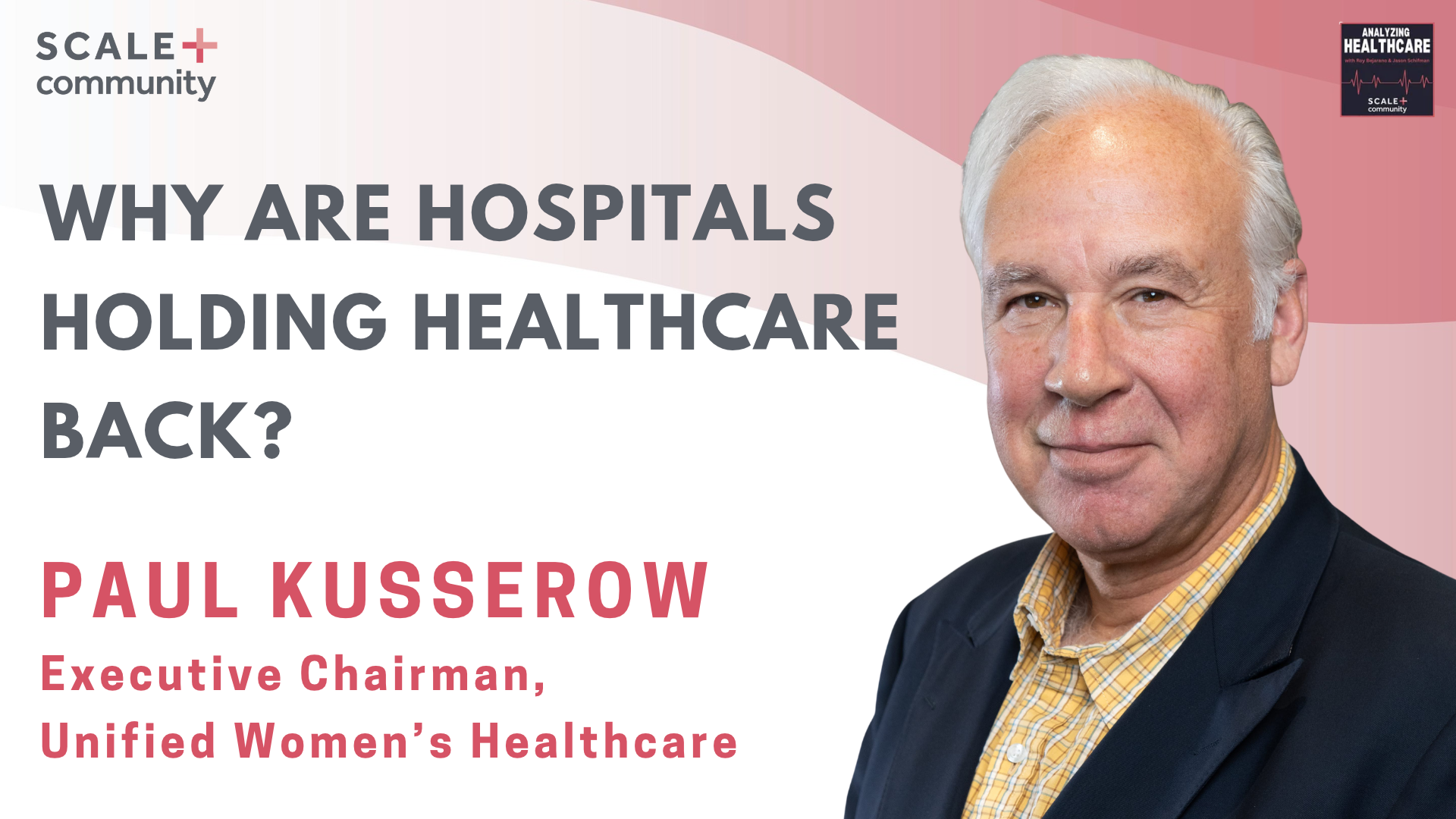
Paul Kusserow on why hospitals hold back healthcare reform, how home care and AI can lower costs, and why physician independence matters for patients.
Roy Bejarano interviews Paul Kusserow, executive chairman of Unified Women's Healthcare and co-author of The Coming Healthcare Revolution. They debate the economics of home-based care, hospital incentives, price transparency and obesity, alongside AI's potential to cut administrative waste. Paul explains why independent physicians, personalized services and practical caregiver support matter, and shares examples from Unified and Careforth that connect healthcare data to patient outcomes. The discussion also challenges hospital-owned physician networks, reimbursement rules, and consumer choice.
Why Paul believes healthcare must shift from hospitals toward community and home-based care
How hospital ownership of physician practices can influence referral decisions
Why consumerism and price transparency are progressing more slowly than expected
How AI could reduce healthcare's enormous administrative burden
Why aging populations and chronic disease require more personalized care
How Unified Women's Healthcare and Careforth are applying data and technology to improve outcomes
Why the future of healthcare may favor flexible, knowledge-driven organizations over capital-intensive models
{00:00} Introduction to Paul Kusserow and The Coming Healthcare Revolution
{03:23} The Case for Shifting Care Beyond Hospitals
{08:52} Healthcare Affordability and Inequality in the U.S.
{17:22} Aging Baby Boomers and the Future of Home-Based Care
{19:44} Medicare Reimbursement and Barriers to Home Care
{24:38} AI, Price Transparency, and Healthcare's Consumerism Gap
{36:33} AI, GLP-1s, and the Fight Against Chronic Disease
{48:57} Why Adaptability and Personalized Care Matter
{56:08} Physician Ownership, Conflicts of Interest, and Healthcare Innovation
{01:00:47} Using Pregnancy Data to Identify High-Risk Patients
Hospital-centered healthcare faces growing pressure from outpatient and home-based alternatives.
Aging populations and chronic disease are changing where and how care should be delivered.
Healthcare consumerism remains constrained by opaque prices and complicated reimbursement arrangements.
AI presents an opportunity to reduce administrative waste, improve decision-making, and strengthen coordination.
Hospital ownership of physicians raises questions about incentives, referrals, and patient choice.
Personalized healthcare requires connecting clinical services with behavioral, social, and everyday needs.
Healthcare innovation can create substantial opportunities when technology, affordability, and patient outcomes are aligned.
Paul Kusserow is Executive Chairman of Unified Women’s Healthcare and former President and CEO of Amedisys and Careforth. He is Co-Founder and Chairman of Healthpilot Technologies and an Operating Partner at Ares Management. Previously, he held senior leadership roles at Tenet Healthcare, Humana, and Alignment Healthcare. Paul serves on several healthcare company boards, including Scion Health, Purfoods, Matrix Medical Management, and Elara Caring. A Rhodes Scholar, he holds degrees from Wesleyan University and Oxford University. He is the author of The Anatomy of a Turnaround and co-author of The Coming Healthcare Revolution.
Paul Kusserow, Roy Bejarano, SCALE Community, Analyzing Healthcare, The Coming Healthcare Revolution, Unified Women's Healthcare, Amedisys, Careforth, healthcare transformation, hospital consolidation, physician independence, hospital ownership of physicians, private equity healthcare, healthcare AI, healthcare costs, home healthcare, aging in place, personalized healthcare, healthcare consumerism, price transparency, administrative waste, healthcare innovation, maternal health, healthcare leadership
Connect with us to explore how our trusted solutions can help you reach your goals. Fill out the form below, and a member of our team will follow up with personalized details for your organization.