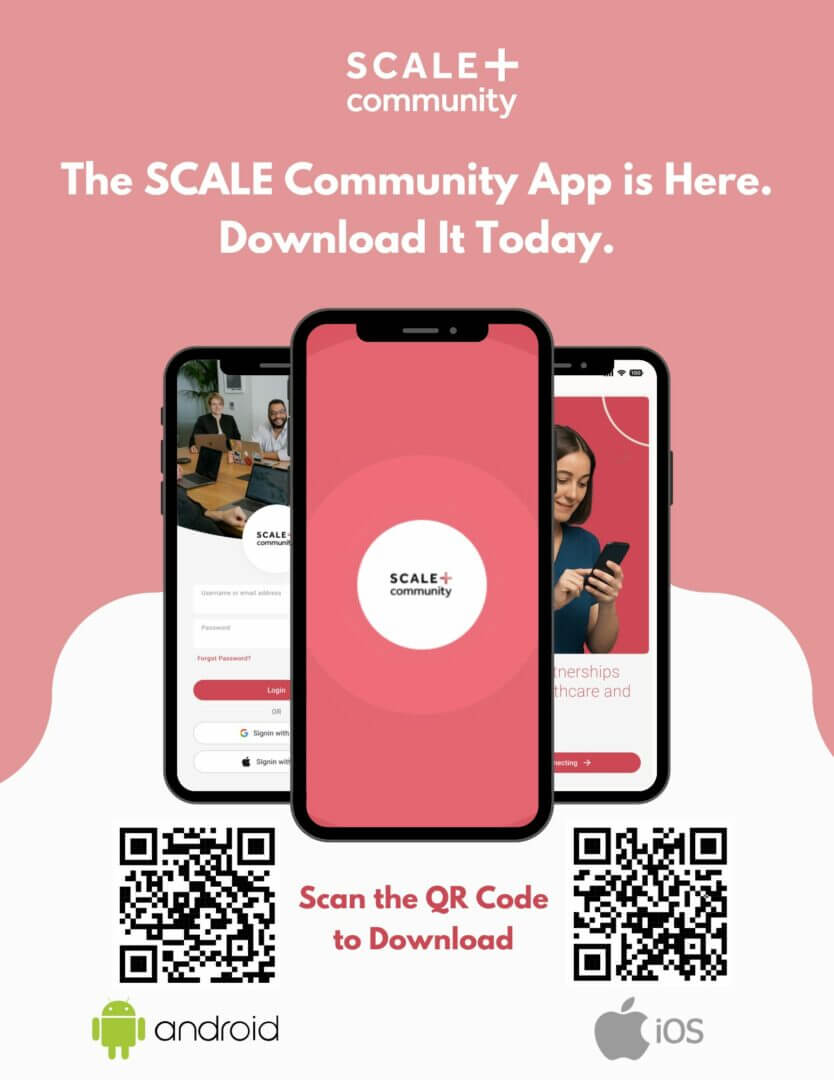

What Is SCALE Community — And What Makes It Different
SCALE Community describes itself as “the country’s first modern healthcare network for physician leaders, MSO management, health‑system management, payor management, academics, and institutional investors.”
Unlike older associations that focus on one segment (e.g. physicians only, hospitals only, or payors only), SCALE unites a broad set of stakeholders. That includes physician‑leaders, executives from management services organizations (MSOs), health‑system leaders, payor executives, and investors all on the same platform.
This cross‑sector mix lets SCALE operate as a modern network: one built not just around titles or specialties, but around shared interest in improving the business and delivery of healthcare. It aims to bridge silos, promote collaboration, and reshape how leadership in U.S. healthcare works.
Because SCALE integrates clinical, operational, financial, and strategic stakeholders, it reflects the interconnected reality of modern healthcare where quality care, efficient operations, regulatory compliance, and financial performance must align together.
Core Offerings: What SCALE Community Gives Its Members
SCALE’s value comes from a wide suite of offerings not just networking, but actionable tools, insights, and community.
• Industry Intelligence, Thought Leadership & Education
Members get access to webinars, whitepapers, research reports, thought‑leadership articles, and market analysis. These cover critical topics: MSO leadership and strategy, private‑equity in healthcare, payer‑provider dynamics, value‑based care, telemedicine, compliance, and more.
This helps leaders stay ahead of trends, understand shifting regulations, and plan strategically rather than reacting. For senior executives managing complexity, that contextual insight can be a differentiator.
• Peer Networking & Cross‑Sector Collaboration
SCALE convenes people across role types: physicians, MSO execs, hospital or health‑system leaders, payor and investor representatives. That diversity creates opportunities for collaboration that might not arise within traditional silos.
Members can meet via online forums, events, and a member directory making it easier to connect with peers facing similar challenges or complementary goals.
Through this network, leaders can share best practices, discuss emerging challenges, evaluate partnerships, and collaborate on cross‑organizational initiatives.
• Events, Roundtables, Conferences & Global Reach
SCALE organizes CEO roundtables, leadership conferences, retreats, and global‑chapter events.
Because SCALE has an international dimension (with global‑chapter ties), it offers members exposure to varied markets, global perspectives, and cross-border collaboration a rare offering for U.S.-focused healthcare leaders.
• Strategic Benchmarking, Data & Market Tools
Members gain access to data dashboards, MSO benchmarking surveys, market analysis, and other analytical tools that provide clarity on industry trends, operational performance, and strategic positioning.
For MSOs, provider groups, or health‑system leaders, these data-driven insights help inform decisions about growth, partnerships, service lines, and investments.
• Flexible Membership & Inclusive Access
SCALE offers membership tiers designed for different kinds of stakeholders from aspiring leaders and emerging executives to large provider organizations, payors, and investors.
This means SCALE can serve a wide spectrum: individuals early in their leadership journey, seasoned executives, and large organizations making it broadly relevant across different levels of the healthcare industry.
Why SCALE Matters Now: Addressing Critical Gaps in U.S. Healthcare Leadership
The U.S. healthcare landscape is under pressure. Cost pressures, changing reimbursement models, workforce stress, rising complexity, regulatory shifts, and rapid technology change all demand new modes of leadership.
Traditional structures siloed physician practices, isolated MSOs or health systems, and segmented payor networks struggle to address these challenges in isolation. That often leads to inefficiencies, fragmented care, poor coordination, and slower innovation.
Organizations like SCALE which bring together diverse stakeholders and facilitate collaboration, shared learning, and data-driven decision‑making help overcome those structural shortcomings.
Elevating Physician Leadership Within Systemic Strategy
Research increasingly shows that involving physicians in leadership roles improves organizational performance, supports systemic changes, and reduces burnout.
By connecting physicians with MSO executives, system leaders, payors, and investors, SCALE enables physician‑led strategy, collaborative governance, and a stronger voice for clinicians in high‑impact decisions. That helps align clinical mission with operational and financial realities a necessary balance for sustainable, high‑quality care.
Enabling Integrated Strategy Rather Than Fragmented Efforts
Because SCALE’s network spans across roles, functions, and organizations, it supports integrated approaches to care delivery, operations, financing, and innovation something traditional siloes rarely manage.
This integrated strategy becomes especially important as the U.S. healthcare sector shifts toward value‑based care, population health, risk‑sharing models, and adoption of new technologies.
Accelerating Innovation and Best‑Practice Sharing at Scale
Through shared data, benchmarking, and cross-organizational collaboration, SCALE helps spread effective practices across the system speeding up adoption of new care models, technologies, or business strategies.
Smaller practices or independent physician groups particularly benefit they gain access to insights, resources, and networks that they might never reach alone.
Creating Leadership Pipelines and Future‑Ready Executives
With membership open to aspiring leaders as well as seasoned executives, SCALE helps build a pipeline of leaders equipped to handle modern healthcare’s complexity. These leaders understand clinical realities, business challenges, regulatory demands, and cross‑sector collaboration making them better prepared for evolving roles.
Early Signs of Impact: How SCALE is Already Reshaping Leadership Dynamics
Although still relatively young, SCALE is already showing signs of influence across U.S. healthcare leadership.
- It has drawn participation from a diverse set of stakeholders, demonstrating appetite for cross‑sector collaboration beyond traditional boundaries.
- Members report benefits such as access to data and insights they could not have secured on their own particularly smaller providers and MSOs.
- SCALE’s events and networking forums have connected executives from different arenas fostering conversations that span clinical care, finance, operations, and innovation strategies.
- The community’s emphasis on leadership, strategic thinking, and collaborative problem‑solving signals a shift away from isolated physician groups or siloed organizational units, toward integrated systems thinking across stakeholders.
These early outcomes suggest SCALE may play a significant role in shaping how leadership in U.S. healthcare evolves aligning incentives, enabling collaboration, and rethinking how providers, payors, investors, and leaders interact.
Challenges & Tensions: What Reshaping Leadership Might Require
The shift toward integrated leadership and broad networks doesn’t come without risks or tradeoffs. Some of the potential challenges include:
- Merging stakeholders with varied priorities (clinical independence, financial returns, payor strategy, investor goals) can create tension. Aligning those diverse interests demands strong governance and transparent communication.
- For physician‑led organizations joining networks with investors and payors, there’s risk that financial or corporate pressures may overshadow clinical mission or patient care priorities. That tension already shows up in debates about MSO influence and consolidation.
- The process of collaboration and shared decision‑making can slow down action compared to independent practices though it may yield better long‑term outcomes.
- With consolidation comes risk: smaller practices may lose autonomy, or physician‑owned practices may become more corporate in structure. That tradeoff raises questions about independence, culture, and control.
These challenges don’t mean SCALE’s model is flawed but they underscore that reshaping leadership requires balance, accountability, and clarity of values across stakeholders.
The Road Ahead: Why SCALE Community Could Shape the Future of U.S. Healthcare
Looking forward, SCALE has potential to deepen its impact and shape how healthcare gets managed, delivered, financed, and led across the U.S. Some of the likely outcomes:
- More integrated care models: As physicians, systems, payors, and investors collaborate through SCALE, we may see expanded adoption of integrated‑delivery systems (IDS), clinically integrated networks (CINs), or other value‑based care models structured around collaboration and shared accountability rather than fragmented silos.
- Faster spread of innovation: New care models, telemedicine, AI, operational improvements, risk‑sharing arrangements, and population-health strategies could spread more quickly across organizations thanks to shared resources and knowledge.
- Stronger leadership pipelines: Emerging leaders with exposure to data, cross‑sector collaboration, and strategic thinking may drive future change in healthcare combining clinical insight with business acumen.
- Greater resilience and adaptability: With a broad, connected network, organizations may better respond to regulatory change, market pressures, or demographic shifts relying on shared learning and collective strategy rather than going it alone.
- Potential for systemic reform through collective action: As SCALE brings together diverse stakeholders, coordinated effort could influence broader industry norms, policy advocacy, market practices, and the future design of healthcare delivery and financing.
In a period of upheaval and transformation, a network like SCALE may help move U.S. healthcare from fragmented practices toward coordinated, strategic, and sustainable systems.
What This Means for You — Whether You’re a Clinician, Executive, Investor or Observer
If you are a clinician, MSO leader, hospital executive, payor, investor, or someone interested in healthcare’s future here’s what SCALE’s rise suggests:
- Consider broadening your professional network beyond your usual peers. Collaboration across sectors can open new opportunities.
- Adopt a systems‑thinking approach: understand that clinical care, business operations, finance, and policy are increasingly interconnected.
- Value data, shared learning, and benchmarking they help guide strategy in a complex, shifting environment.
- Be aware of tradeoffs: structural change may raise tough questions around autonomy, consolidation, and balance between care quality and financial goals.
- Watch leadership evolution: new types of leaders clinically trained but business‑savvy and networked may emerge to shape the next era of U.S. healthcare.
Takeaway
SCALE Community is more than a professional association. It represents a shift: toward integrated, cross‑sector leadership, collaborative strategy, shared intelligence, and systemic thinking in U.S. healthcare.
By bringing together physicians, MSO executives, system leaders, payors, and investors providing data, networking, education, and opportunities for collaboration SCALE is reshaping how healthcare is managed, financed, and delivered.
As healthcare continues to evolve under pressure from cost, complexity, regulation, and innovation, networks like SCALE may form the backbone of a new, more resilient, more connected, more forward‑looking industry.